




Choosing between a 10×10 and a 10×20 booth is not just about size. It is about how effectively you use limited space to attract attention, guide visitor flow, and communicate your brand message within seconds.
A smart layout can make a small booth feel open, inviting, and high-impact, while a poor layout can make even a larger booth feel cramped and confusing.
This guide focuses on practical layout strategies for small and mid-size trade show booths so you can maximize visibility, engagement, and lead generation without overwhelming your space.
Understanding the Real Difference Between 10×10 and 10×20 Booths
A 10×10 booth gives you 100 square feet. This is the most common booth size and is usually part of an inline row with neighboring booths on both sides.
A 10×20 booth doubles your depth or width depending on orientation, giving you 200 square feet. That extra space allows for better visitor flow, small meeting areas, and more layered branding.
The key difference is not just size, it is layout flexibility.
Best Layout Ideas for a 10×10 Booth
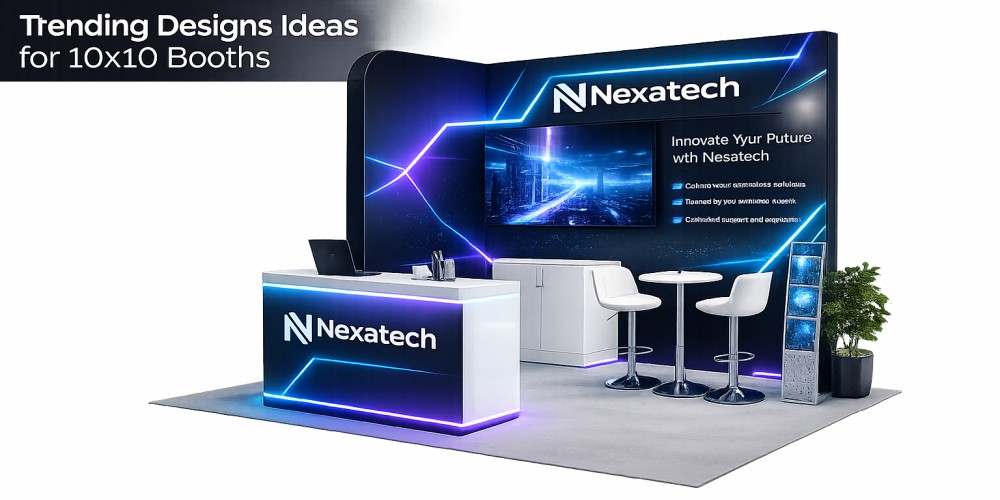
A 10×10 booth must be clean, focused, and easy to understand at a glance. Every element should have a purpose.
1. Back Wall Focus Layout
Use the back wall as your main branding zone. A large backdrop or tension fabric display creates strong vertical impact without taking up floor space.
- Keep graphics bold and readable from a distance
- Avoid cluttered text
- Use one strong message instead of many small ones
2. Open Front Layout
Avoid placing tables across the front. This creates a barrier. Instead:
- Keep the front open to invite walk-ins
- Place a small podium or narrow counter to the side
- Allow staff to step forward and greet visitors
3. Product or Demo Corner
If you are showcasing a product:
- Use one side of the booth for a demo station
- Keep cables hidden and surfaces tidy
- Make sure at least two people can stand comfortably without blocking the aisle
4. Vertical Over Horizontal
Floor space is limited, so think upward:
- Tall banners
- Backlit backdrops
- Shelving integrated into the back wall
These elements add presence without making the booth feel crowded.
Best Layout Ideas for a 10×20 Booth
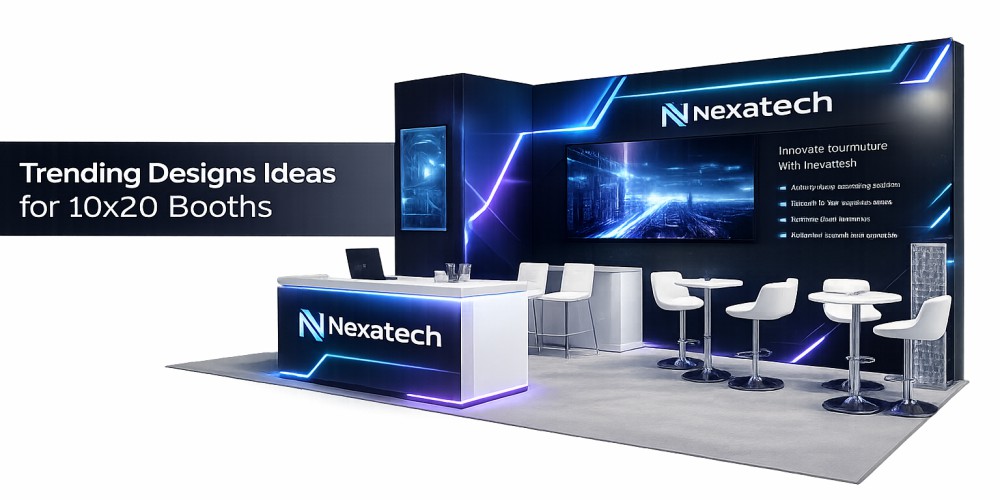
A 10×20 booth gives you room to create zones instead of a single flat presentation.
1. Front Engagement, Back Conversation
Divide the booth into two functional areas:
- Front half for attraction and quick conversations
- Back half for deeper discussions or seated meetings
This allows casual visitors to stop without feeling pressured, while serious prospects can move further inside.
2. Central Walk-In Path
Create a subtle path into the booth:
- Place displays along the sides
- Keep the center visually open
- Use flooring or lighting to guide movement inward
This layout makes the booth feel more like a space to enter rather than just a wall to look at.
3. Mini Meeting Area
A small round table with two chairs in the back corner can significantly improve lead quality. It gives you a semi-private space for real conversations without needing a large structure.
4. Layered Branding
With more wall space, you can:
- Use a main backdrop at the rear
- Add secondary graphics on the side panels
- Highlight one product or service visually instead of listing everything
If you are planning a structure that balances branding, flow, and display elements, reviewing options for Firebird Prints custom trade show booths can help you choose display systems that match your layout goals.
What Works Best for Small Booth Spaces Overall
Regardless of size, certain layout principles always perform better.
Keep Sightlines Open
If attendees cannot see into your booth, they are less likely to enter. Avoid tall objects at the front corners that block visibility.
One Clear Message Beats Many
Trying to promote five services in a small booth usually weakens impact. Focus on one core offer or theme and support it visually.
Staff Positioning Matters
Staff should stand near the front corners, not sit in the back. Body language and positioning influence how approachable your booth feels.
Lighting Changes Everything
Good lighting can make a small booth look premium. Even simple LED spotlights aimed at graphics can dramatically increase visibility.
Common Layout Mistakes to Avoid
- Placing a large table across the entire front
- Overloading the booth with too many banners
- Blocking the entrance with product displays
- Hiding staff behind counters
- Using tiny text that cannot be read from the aisle
Small booths must feel open and intentional, not like storage spaces.
Choosing the Right Layout for Your Goals
A 10×10 booth is ideal if your goal is brand visibility and quick lead capture. A 10×20 booth is better if you expect longer conversations, product demos, or scheduled meetings during the show.
The layout should support your objective, not just fill space. If you are unsure which structure or display configuration fits your booth size and marketing goals, exploring professionally designed custom trade show booth solutions can help you combine layout planning with the right hardware and graphics.