

A welcome kit is a small budget item that lands at a disproportionately important moment. It is the first physical thing a new hire receives from the company, and it arrives before they have formed any other opinion.
Most of what goes wrong with these kits is not the merchandise. It is the timing, the sizing, and the fact that nobody owns the process, so it gets rebuilt from scratch every time somebody starts.
What a First Day Kit Is Actually For
It is not a gift and it is not a reward. It is a signal that somebody prepared for this person’s arrival.
That framing changes what belongs inside. The kit does not need to be expensive. It needs to look considered, arrive when it should, and contain things the person can use in their first week. A modest kit that shows up two days early does more than an expensive one that shows up in week three.
Send It Before Day One, Not On It
This is the highest impact change most companies can make, and it costs nothing.
A kit sitting on a desk on the first morning is nice. A kit that arrives at someone’s home a few days before they start does something different. It reaches them during the gap between accepting the offer and starting, which is exactly when new hires feel most uncertain about the decision they just made.
It also removes the awkwardness of unwrapping something in front of a room of strangers. Working backwards, that means artwork and production have to be finished before the start date rather than around it, so kits need to exist in stock rather than being made per hire.
How Many Items Belong in One Kit
Three to five. Below three the box looks empty. Above five it stops feeling curated and starts feeling like clearance.
The structure that works is one hero item carrying most of the budget, two or three supporting pieces, and something printed. The hero is usually apparel or drinkware. The supporting items are practical and low cost. The printed piece is the note.
Resist the pressure to add. Every extra item lowers the average quality of the kit and raises the shipping cost.
Setting a Per Hire Budget That Holds
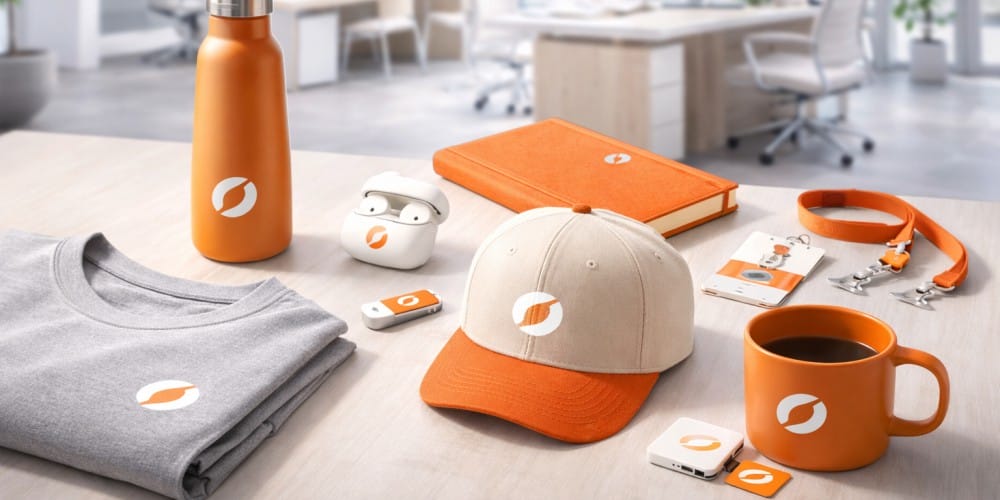
Decide the number per person before choosing anything, and include the packaging and the shipping in it. Kits get quietly over budget because the box, the fill, and the courier charge are treated as afterthoughts, and together they are a real share of the total.
One realistic budget spent on three good items beats the same budget spread across six. If the number is tight, cut item count rather than item quality. A kit with two excellent things in it reads as deliberate. A kit with six cheap things reads as a job lot.
Remote Hires Change the Whole Plan
If everyone comes into an office, kits get delivered in bulk and handed over. If people are distributed, every kit becomes its own parcel with its own address and its own courier charge, and that is a different project.
Three things follow. You need home addresses, which means asking for them and handling them carefully. Box size starts to matter financially, because couriers charge on the space a parcel occupies. And the timing has to account for transit, which varies a lot across the country.
Companies running this at any volume usually stop assembling kits in house. The practical version is to produce a run once and have custom swag boxes assembled, stored, and released one at a time as people start.
Collecting Sizes Without Ruining the Surprise
Apparel is the most wanted item in a welcome kit and the biggest source of delay. You cannot produce a hoodie for someone whose size you do not know, and asking creates a round of chasing.
Three workable approaches. Add a size field to the pre-start paperwork the person is already completing, which is the least intrusive option. Send a short form framed as setting up their equipment, which most people answer quickly. Or pick a size-agnostic hero item such as a tote, a beanie, or a tumbler, and hand the apparel over later once you know them.
If none of that fits, order a standard size spread and accept some exchanges. Just do not silently guess and hope, because the person will notice and will not say anything.
The Note Card Does More Than the Merch
The cheapest thing in the box is usually the thing people keep.
A printed card signed by the direct manager, or by the team, turns a parcel of objects into a message from actual people. It takes ten minutes and it is the difference between a company gift and a personal welcome.
Keep it short and specific. A generic printed welcome message reads as a template, because it is one.
Making It Repeatable for Every Hire
The kit that works is the one that still works in nine months when the person who set it up is busy with something else.
That means fixing the contents rather than reinventing them per hire, producing in a batch at volume pricing rather than one at a time, and having a single trigger in your onboarding process that releases a kit. Once that exists, onboarding kits stop being a project and become a step.
It also removes the fairness problem. When kits are assembled ad hoc, early hires get better ones than later hires, and people compare.
What Fails in Onboarding Kits
The recurring failures are consistent enough to list.
Kits that arrive late, which broadcasts the opposite of prepared. Company-branded items so heavily logoed the person will only wear them at work. Sizes guessed rather than asked. Contents that vary between hires. And items that are useful only in an office, sent to somebody working from home.
For guidance on which items survive past the first month, see corporate swag ideas that employees actually keep.