





When schools plan custom apparel orders, the first question is usually about price. But bulk apparel printing is rarely just about the number of pieces. The final cost depends on garment type, print method, design setup, order complexity, and how organized the order is before production begins.
That is why two school orders with the same quantity can end up with very different pricing.
For schools, clubs, student groups, and campus teams, the best results usually come from understanding what affects cost before the order is placed. A more organized order usually saves money, reduces mistakes, and makes reorders much easier later.
If your school is specifically planning hooded apparel, our school hoodie printing page goes deeper into hoodie options, decoration methods, and bulk order planning for student groups and teams.
Why Bulk School Apparel Orders Need a Different Approach
School apparel orders are different from regular custom clothing orders. Most schools are not ordering for one small group with identical sizes and a simple logo. They are usually coordinating apparel for a larger group with mixed sizes, multiple roles, budget limits, and fixed timelines.
A school order may involve:
- students in different grades
- staff members
- clubs and councils
- sports teams
- graduation groups
- event volunteers
That complexity affects both price and production. The more variables involved, the more important it becomes to plan the order properly.
What Counts as a Bulk School Apparel Order
There is no universal number that defines bulk printing, but for most schools, bulk usually starts when the order involves enough pieces to justify production setup and batch planning.
Bulk school orders often include:
- 25 to 50 pieces for a club or student council
- 50 to 100 pieces for a class or school event
- 100+ pieces for larger school-wide programs
The larger the order, the more important method selection becomes. In many cases, the difference between a well-planned 100-piece order and a disorganized 100-piece order shows up in both price and final quality.
The Biggest Factors That Affect School Apparel Pricing
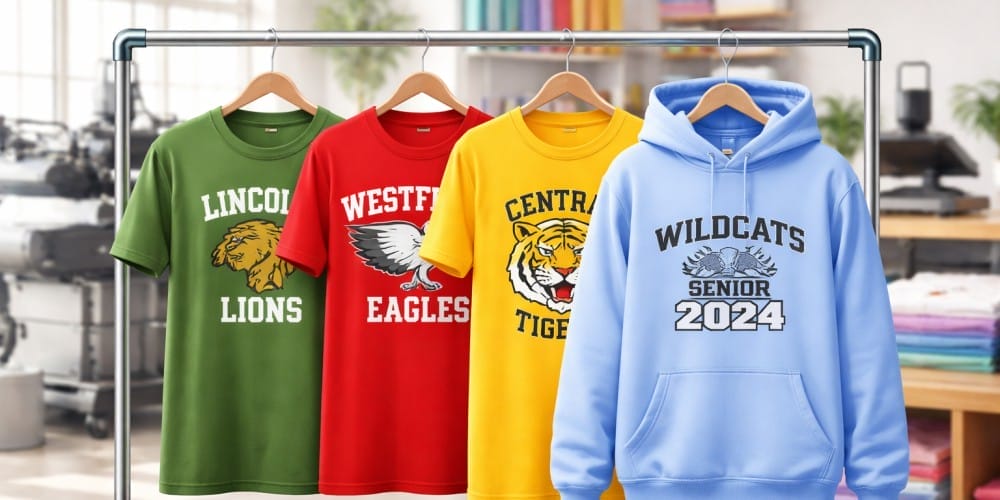
Schools often assume quantity is the main pricing factor. It matters, but it is only one part of the equation.
1. Type of Garment
A t-shirt, hoodie, sweatshirt, and polo do not cost the same to source or decorate.
Pricing changes based on:
- garment category
- fabric weight
- brand
- fit and style
- premium vs budget garment selection
For example, a heavyweight hoodie with a premium fit will cost more than a basic t-shirt, even before printing is added.
2. Printing Method
The decoration method has a direct effect on cost, appearance, and durability.
Common methods include:
- screen printing
- embroidery
- DTF printing
- DTG printing
For larger orders, screen printing is often the most efficient choice because setup costs are spread across more pieces. For smaller or highly detailed orders, digital methods can make more sense.
3. Number of Print Locations
One left chest print costs less than front, back, and sleeve printing together.
Typical print placements include:
- left chest
- full front
- full back
- sleeve print
- name or number add-ons
Every added print location increases production time and cost.
4. Number of Ink Colors or Design Complexity
A simple one-color school logo is much easier and less expensive to produce than a large multicolor graphic with fine detail.
Complex artwork can affect:
- setup time
- print method selection
- production speed
- consistency across the full order
5. Order Organization
This is one of the most overlooked pricing factors.
A school that provides clean artwork, confirmed quantities, final sizes, and one clear point of contact is much easier to produce for than a group still changing counts and design details at the last minute.
Better organization often means:
- fewer errors
- smoother production
- faster turnaround
- lower chance of added costs
Why Hoodies Often Cost More Than Schools Expect
Hoodies are one of the most popular school apparel items, but they also come with more pricing variables than many people realize.
That is because hoodies involve:
- higher garment cost
- thicker fabric
- more decoration space
- more noticeable quality differences between budget and premium options
Many schools also want hoodies to feel substantial enough for students to wear beyond a single event. That usually means choosing a better garment, not just the cheapest available option.
If your order is centered around hoodies and long-term student wear, our school hoodie printing page is the best place to compare hoodie-specific options in more detail.
How Schools Can Lower Cost Without Lowering Quality
Trying to save money by choosing the lowest-grade garment usually backfires. The smarter approach is to simplify the order while protecting the parts that matter most.
Here are practical ways schools reduce cost without hurting the final result:
Keep the Decoration Simple
A clean one-color or two-color design usually costs less and often looks better on apparel than an overcomplicated graphic.
Limit Extra Print Areas
Front and back prints may be enough. Adding sleeves, names, or multiple locations should only happen when they serve a real purpose.
Standardize the Garment
Using one garment style for the full group is easier and more cost-effective than mixing too many product variations.
Finalize Sizes Before Production
Last-minute size changes create confusion and slow down production.
Order Early
Rush jobs often limit options and increase pressure on the production timeline.
Planning Sizes for School Apparel Orders
Size planning is one of the most common weak points in school orders.
Mistakes usually happen when:
- students guess their sizes
- forms are submitted late
- totals are not verified
- youth and adult sizes are mixed carelessly
A better approach is to build a clear size collection system before production begins. Even a simple spreadsheet can save time and prevent expensive mistakes.
Good size planning should include:
- full size breakdown
- quantity by size
- garment type confirmation
- final approval before printing starts
Budget vs Value in School Apparel Printing
The cheapest quote is not always the best value. Schools often discover this after the order is finished, when garments feel poor, prints fade early, or students stop wearing them.
Better value usually means:
- apparel students actually want to wear
- decoration that lasts
- cleaner fit and feel
- easier reorders later
- fewer complaints from the group
That matters even more for schools ordering apparel every year. A better first order usually makes the next order much easier.
Reorders Matter More Than Most Schools Think
Many school groups treat apparel as a one-time project, then realize a few months later that they need additional pieces for new members, late signups, or future events.
That is why reorders should be considered from the beginning.
A well-managed order makes it easier to repeat:
- the same garment
- the same color
- the same print placement
- the same artwork setup
If your school, club, or organization expects repeat orders across different products, working with a team apparel supplier can make future ordering much more consistent and less stressful.
Common School Apparel Ordering Mistakes
Most pricing problems do not come from the printer. They come from preventable planning mistakes.
The most common ones are:
- waiting too long to start
- sending low-quality artwork
- changing quantities repeatedly
- choosing garment quality only by price
- overcomplicating the design
- collecting sizes too late
- not planning for reorders
These issues create friction, delays, and unnecessary cost.
How to Build a Smoother School Apparel Order
The best school apparel orders usually follow a simple structure:
- define the purpose of the apparel
- choose the garment type
- decide on the decoration style
- finalize artwork
- collect sizes and quantities
- confirm the timeline
- approve production details once
That process is simple, but it makes a big difference.
Bulk apparel printing for schools works best when the order is planned with clarity from the start. Pricing is not random, and it is not based on quantity alone. Garment choice, print method, design complexity, and order organization all affect the final result.
For schools that want a better outcome, the goal should not be to chase the cheapest possible quote. It should be to build an order that is easy to manage, cost-effective, and worth wearing after it is delivered.


